Trump is one step closer to his ‘Golden Dome’ in Greenland, and it will be ‘absolutely devastating’ for U.S.-European relations
· Fortune
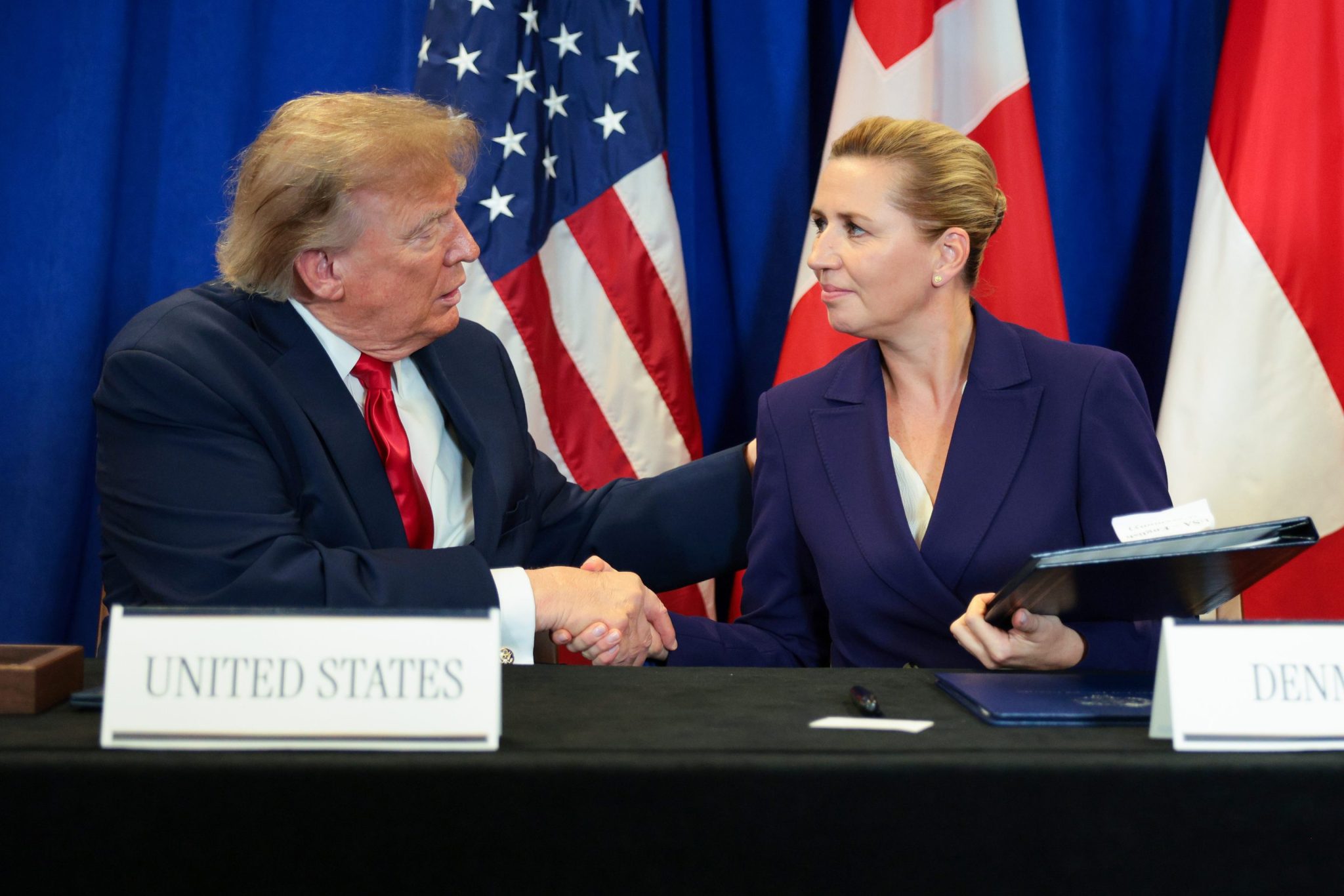
President Donald Trump is one step closer to his goal of expanding U.S. military presence across Greenland, but it may be costing America its relationship with Europe, long after Trump leaves the White House.
Visit asg-reflektory.pl for more information.
The Danish parliament unanimously approved a security deal with Trump on Thursday, which would allow the U.S. to have at least two additional military bases on Denmark’s autonomous territory of Greenland, as well as the construction of infrastructure for the “Golden Dome,” a multilayer missile defense system. Trump and the Danish and Greenlandic prime ministers initially signed the agreement in September. The pact still needs formal notification from the U.S. before it takes effect.
Trump has repeatedly threatened to take over Greenland since his second term began. He has argued that the country’s positioning between Russia and the U.S. creates the need for a strong American military presence to potentially track and intercept missiles. The island also is abundant in rare earths that have become more accessible as climate change melts the polar ice in the area.
Tensions between Trump and Denmark peaked in January, when the president refused to rule out military force in pursuit of the island, alarming not just Danish and Greenlandic authorities, but also longtime allies in NATO, especially because the U.S. and Denmark have had a longstanding defense agreement in place since 1951, which already outlines a path for the U.S. to grow and maintain a military presence on the island. Trump ruled out force days later, in a Jan. 21 speech at the World Economic Forum in Davos.
But foreign policy experts warn that while the new security deal effectively expands upon the concessions from the 1951 agreement and marks a de-escalation of tensions between the U.S. and Denmark, the prolonged friction surrounding Greenland will have lasting negative consequences on the U.S.
“I don’t think that it has been worth the cost,” Mikkel Runge Olesen, a senior researcher at the Danish Institute for International Studies in Copenhagen, told Fortune. “This crisis has been absolutely devastating for U.S.-Danish relations, for U.S.-Greenlandic relations, and for U.S. European relations in general. I think that the damages that this crisis has caused will endure long after Trump leaves office.”
What Trump loses in the security deal with Denmark
The Trump administration has heightened strain between the U.S. and Europe throughout the president’s second term, including pushing European rearmament on the grounds that the U.S. no longer was interested in providing as much military aid and was divesting from efforts to defend Ukraine. The U.S. is also warning that a $3.4 billion European Investment Bank Loan to Airbus could break a truce in a long-running aircraft subsidy fight and put its broader trade deal with the EU at risk.
When Trump escalated tensions between the U.S. and Greenland in January, the conflict became a broader European issue, Olesen argued. Following Trump’s assertions, the Netherlands, Greece, Luxembourg, Slovenia and other European nations issued joint statements in support of Greenland. Danish Prime Minister Mette Frederiksen meanwhile warned that if a U.S. military offense against Greenland were to come to fruition, it would end NATO.
“There was a moment where it sort of became a rallying cry for opposition to the U.S.” Olesen said. “From a European perspective, all those things sort of pull in the same direction. You can say, ‘Well, the Greenland crisis was one episode out of a few, right?’ But it was probably one of the few big ones.”
Experts have warned the “Golden Dome,” intended to be partly modeled after Israel’s “Iron Dome,” also risks being a greater financial burden than anticipated. An analysis from the Congressional Budget Office (CBO) found the defense system is projected to cost $1.2 trillion to build and operate over 20 years, far exceeding Trump’s initial $175 billion estimate. Steve Fetter, a professor of public policy at the University of Maryland, argued that the technology behind the dome may not even be very effective, as Russia and China could overwhelm the system by barraging it with cheap missiles or find other means of skirting its defenses, making it not just an expensive undertaking, but one that may provide little protection.
What Trump gains in the security deal with Denmark
The new security deal does hold some advantages over the 1951 agreement, Olesen explained. Most importantly, he said, is that the agreement will protect U.S. resource extraction by restricting foreign investments from non-NATO and non-European Union partners, which creates a greater barrier for adversaries like China to invest in Greenland. While Denmark and Greenland were already shifting away from Chinese investments, the deal effectively safeguards China’s exclusion.
The agreement also includes written assurances outlining the modernization of the U.S. Pituffik Space Base, as well as new defense areas in the Narsarsuaq and Mestersvig regions of the island. Per the treaty, Greenland is still a territory of Denmark and if it were to pursue its independence, it must remain under NATO. While Greenland was still likely to be part of the alliance anyway, the agreement removes any uncertainty for the U.S.
Trump may also see the treaty as a victory for more symbolic reasons, Garret Martin, co-director of the Transatlantic Policy Center at American University, told Fortune. The U.S. military presence on Greenland does indeed hold military significance, but the assurance of greater defense on the island is likely more important to Trump than the rest of his administration, Martin argued. He likened the security agreement to former President Barack Obama’s 2015 Iran nuclear deal, a since-collapsed pact for Iran to restrict its nuclear program in order to receive economic sanctions relief: After a common midterms defeat, the White House usually shifts to implementing policies where they can have a signature achievement or lasting policy.
“He’s very much a wounded political beast because of the rout in the midterms,” Martin said.
“But he still has two years, and foreign policy is still the area where the president has and will keep major influence.”
This story was originally featured on Fortune.com